BlockIntel
Clean, structured on-chain data for AI agents. It covers Bitcoin, Ethereum, Tron, Solana, and twenty EVM chains. A private on-chain investigation support system I built and use in my own advisory work.
AI-focused lawyer: governance, regulation, and policy, legal opinion on crypto cases, and on-chain investigation. Based in Pune, India.
Keshav Maheshwari
AI · Lawyer · On-chain Investigator
I am AI-forward and self-taught. I use AI heavily, every day, across workflows, policy, governance, and a lot more. I have been a lawyer since 2015, with five years in crypto investigations.
I co-founded c4 Academy, where we train law enforcement and investigators to read blockchain evidence. I am building AI law, governance, and regulation advisory work. And I am doing doctoral research at SSBM on how small Indian businesses actually use AI.
I have been invited to deliver a lecture at the National Police Academy, and invited by Mumbai Police. I use every tool I write about. That is the only way I know how to do this work.
These are not separate products. They are one job split into parts: understand crypto crime, build tools that match how the work really goes, and share what works.
Clean, structured on-chain data for AI agents. It covers Bitcoin, Ethereum, Tron, Solana, and twenty EVM chains. A private on-chain investigation support system I built and use in my own advisory work.
Training for law enforcement, lawyers, and investigators who work on crypto crime. Real investigation tools, working manuals, and certification courses, all built from actual cases.
Follows stablecoins, mostly USDT, as they move between chains. It shows the movement patterns that matter when someone is trying to hide where money went. Personal stablecoin intelligence platform. Gated, used for my own research and advisory work.
Live peg and flow intelligence for USDT, USDC, DAI, USDe, and PYUSD: stress index, cross-chain surfaces, teachable alerts, optional AI narratives, and a cited research companion. Free and source-available.
Public-record crypto and VDA intelligence for India, gradually going global. SCIR grades public documents on crypto-linked matters to track enforcement, policy, and payment-rail patterns over time, not a guilt score or a crime census. API and knowledge graph are not yet public.
A source-available, client-side workbench for multi-chain key derivation, address mining, and entropy security. It runs entirely in the browser, across nine chains including Bitcoin, Ethereum, Solana, and Tron, with zero network requests and no backend.
A platform for designing, compiling, and deploying ERC-20 tokens. The public engine is open and never takes custody, so you own exactly what you deploy.
AI law, governance, and regulation advisory. We handle compliance, governance, contracts, product review, and policy support across major jurisdictions.
Findings trace to public-record sources, not private claims.
Tools and methods are built and used personally, not outsourced.
Case material is protected; findings are not.
I use AI every day. It helps me build investigation tools, run forensic pipelines, read regulations across jurisdictions, and carry out my doctoral research. It does not do my thinking. It lets me go further than I could alone.
Here is what I have found. Give AI to someone who knows the subject deeply and you get the output of a small team. Give it to someone who does not and you get confident nonsense. The difference is not the model. It is the person using it.
So everything I build assumes you already know the work. The tools extend what you know. They do not stand in for it.
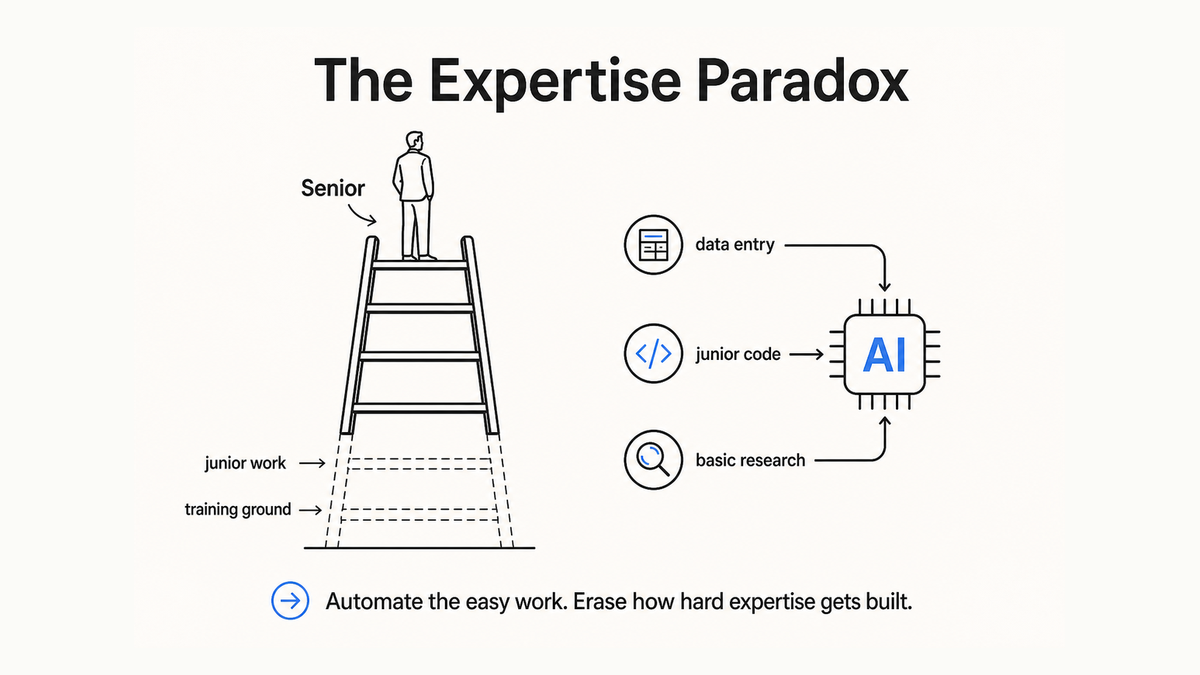
The real AI threat is not mass job loss alone. It is the collapse of the training ground. Automate the easy work and you may erase how hard expertise gets built.
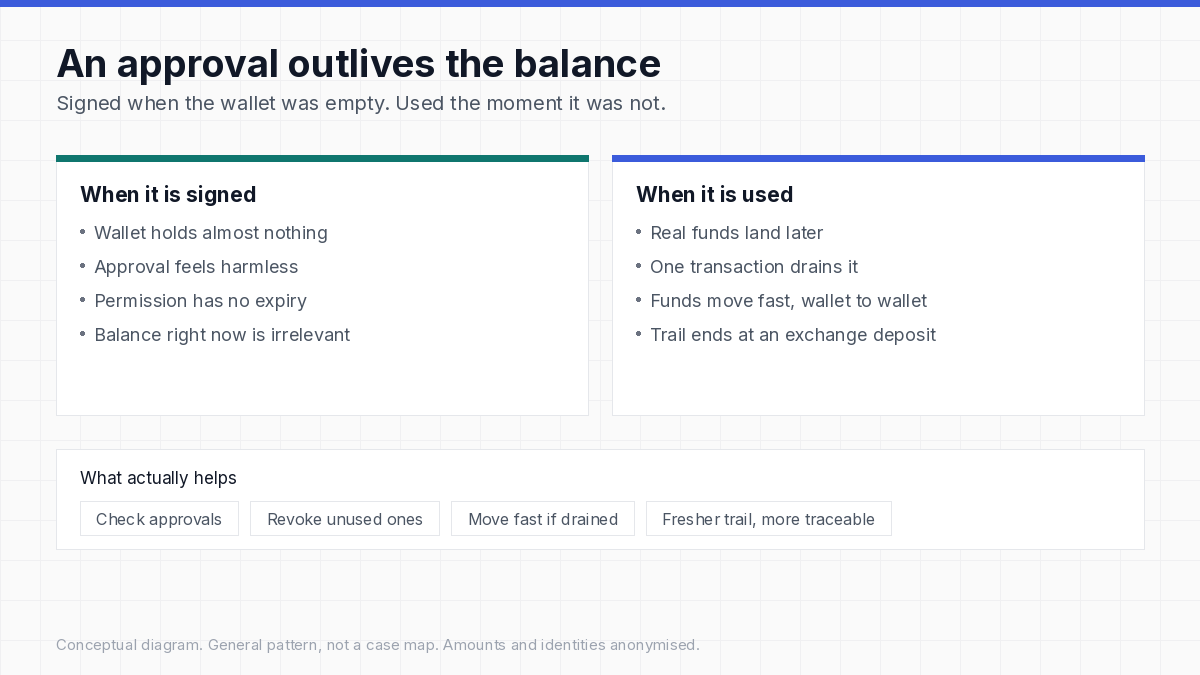
A case study on a Tron USDT drain: an empty-looking wallet signs an approval, real funds arrive later, and one transaction empties it. What the trail can prove, and where it stops.
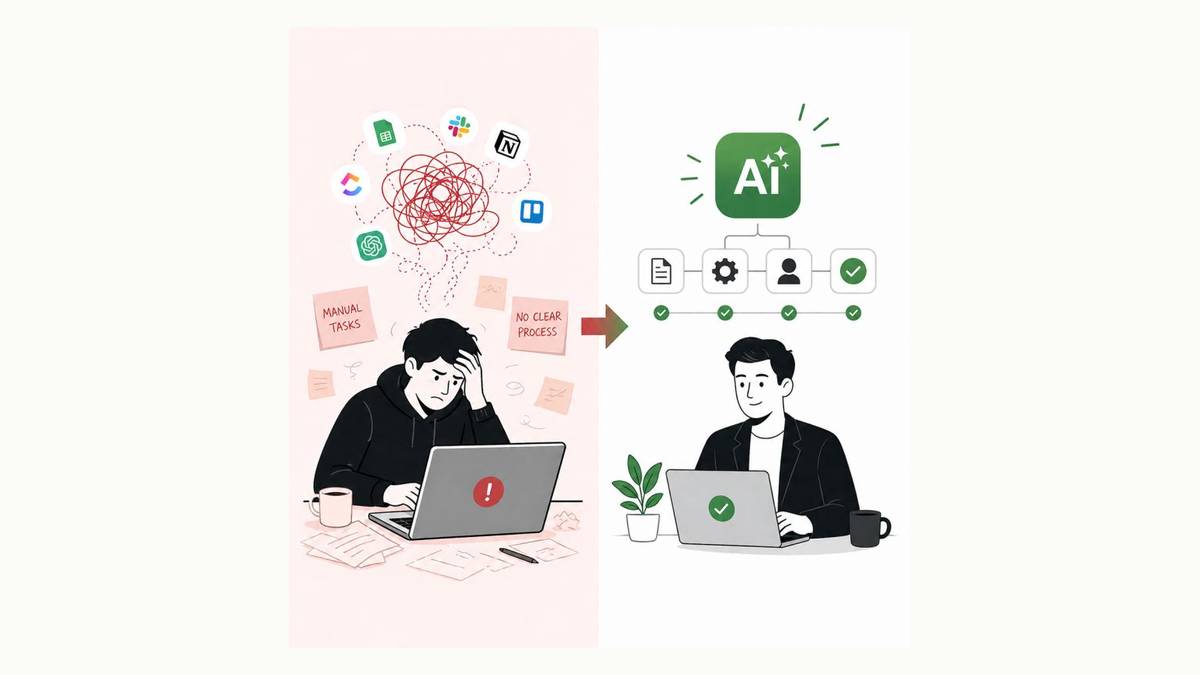
Most companies add AI before they have a workflow worth amplifying. AI is not the system. It is the amplifier. Structured processes create scalable AI. Broken ones create faster chaos.
On-chain reconstruction of the 26 July 2026 WEMIX$ helper-proxy exploit. Net mint, exit path, hypothesis matrix, and what remains open for attribution after foundation containment.