Case Solved: A Wallet With Almost Nothing Lost Six Figures in USDT, in One Transaction
A case study on a Tron USDT drain: an empty-looking wallet signs an approval, real funds arrive later, and one transaction empties it. What the trail can prove, and where it stops.
This is based on real work. The amounts, dates, and details have been changed so nobody involved can be identified.
Case solved. A wallet with almost nothing in it lost six figures in USDT on Tron, in one transaction.
I cannot share the specifics of this one. But the pattern repeats across USDT theft cases on Tron, and it deserves more than the usual "don't click approve" warning.
How it plays out
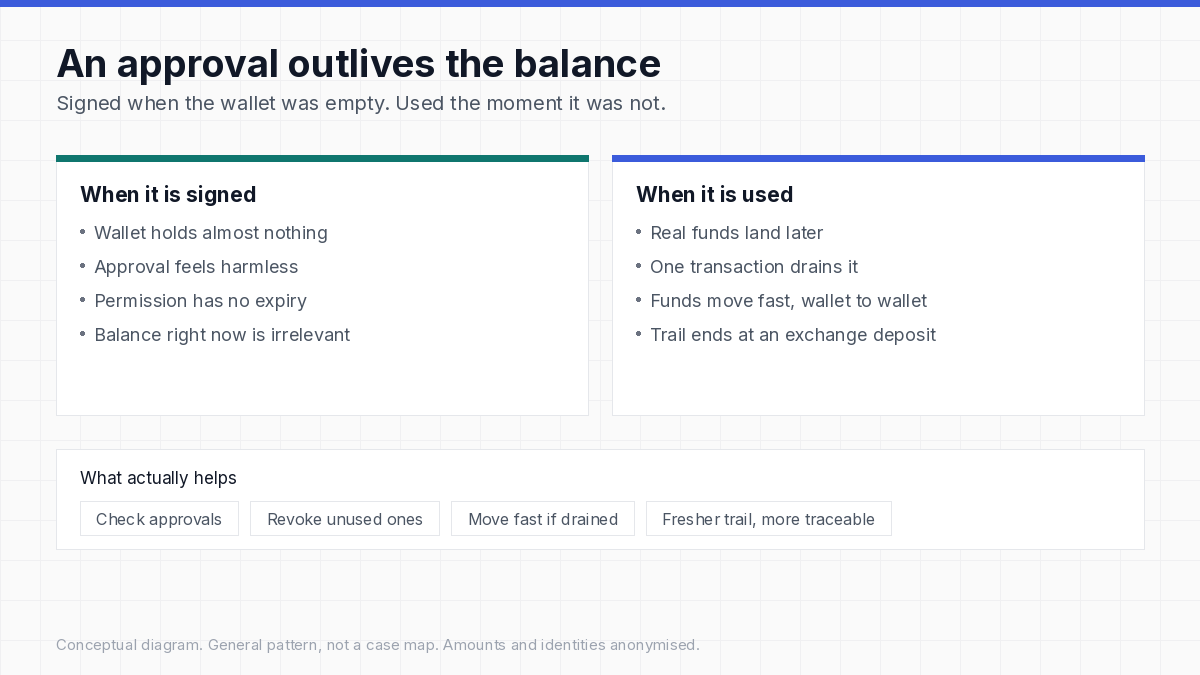
The victim's wallet gets a small deposit first. At that moment, they are guided into signing an approval. Since the wallet holds almost nothing, signing feels harmless. But an approval is not tied to what is in the wallet right now. It is a standing permission. When real money lands later, it walks straight into a door that was already left open.
Most people miss that part. An approval does not expire when the balance does.
Why Tron and USDT specifically
USDT on Tron is one of the most used stablecoin rails anywhere. Fees are low, transfers are fast, and adoption is broad, especially in markets where a dollar-pegged stablecoin substitutes for a bank account. That popularity is exactly why it draws this kind of attention. A drainer only needs one signed approval, and a rail with millions of active wallets gives it a large pool to work from.
The approval mechanism itself is not unique to Tron. Any chain built around a token standard with allowances, ERC-20 and its equivalents included, works the same way. Tron just carries enough USDT volume that the pattern shows up here often.
What the setup tells you
In cases I have worked on, the wallet that ends up draining funds is not improvised on the spot. It is prepared beforehand. That single fact is usually enough to tell you the theft was planned, not opportunistic.
The drain and the trail
The drain itself is usually one clean transaction. After that, funds move quickly through a chain of wallets. The speed looks careless. It is not: it is a script running on autopilot.
Within hours, the money is usually inside a large exchange. That is where the on-chain trail hits its limit. The chain shows where funds went, not who owns the account. Getting from a deposit to a name needs a legal process, not just tracing.
Where this one landed
This case came to me through a referral, not a cold search. That is usually how the work that goes somewhere starts.
Tracing did what it is supposed to do: it built enough to identify who was behind it. What happens next, arrest, prosecution, any recovery through a legal process, sits with law enforcement now. That is where an investigator's job ends and law enforcement's job begins. Identifying someone is not the same as prosecuting them, and I do not control what happens after a handoff.
What to do now
A few habits close most of the gap between harmless and exploited:
- Check what your wallet has approved, not just what it holds. A block explorer or a dedicated approval checker (tools like revoke.cash cover the major chains, including Tron) will list every standing permission tied to your address.
- Revoke anything you do not recognise or no longer use. An unused approval is pure downside: it does nothing for you and everything for whoever is waiting on it.
- Treat a small, unexpected deposit as a signal, not a gift. If crypto shows up in a wallet you were not expecting it in, do not interact with anything it prompts you to sign.
- If a drain happens anyway, move immediately. Note the transaction hash, the time, and the destination address before anything else, then get in touch with an investigator or the exchange the funds landed on. The trail is at its freshest in the first hours.
My honest take
Most people treat "approve" as a one-time click. It is closer to handing someone a key and hoping they never use it.
The chain never lies. It just needs someone willing to read it.
Reading it right is not a five minute job. Behind every "case solved" line is thousands of transactions and addresses checked one by one, cross-referenced across wallets, until the pattern connects and a proper evidence package comes together.
What working with me looks like
If you bring me a case like this, what you get is a report written for your situation: the blockchain records behind every finding, laid out in plain language, and packaged so it can go to a bank, an exchange, or your lawyer without further translation. That is the evidence and the reasoning. The legal process that follows it, court orders and law enforcement liaison, is separate work, and I can help you get it moving.
If you think you have lost funds this way, get in touch. If you want structured training on how this work is done, c4 Academy runs programmes for law enforcement agencies and investigators.